FAQs
If you're beginning the process, our guide Planning a memorial outlines the steps and key decisions to consider.
Below, you'll find answers to some of the most frequently asked questions.
If you’d like to speak with someone or need help with any part of arranging a memorial, please get in touch.
The price of a memorial depends on the size, shape, and type of stone chosen. Standard pricing includes your selected granite colour, inscription paint, and up to 200 characters of text. Installation is included, but if you prefer to collect and install it yourself, we can provide a quote for pick-up.
As a guide, most standard headstones range between $3000 and $5000. Smaller granite plaques start from $400, and basic headstones for collection begin at around $1550.
Timeframes vary depending on what you’re ordering. A plaque usually takes 3–4 weeks. If you choose a headstone from our in-stock range, it can be completed in 4–6 weeks. For designs we need to order, allow 2–3 months for delivery. Once the stone arrives, we complete all inscriptions, images and finishing work onsite.
Not all styles are kept in stock, and global supply delays have sometimes extended wait times to six months. If you have a specific date in mind, let us know—we’ll show you what’s currently available.
Yes, and Yes. The local council require permission, and have size and shape regulations depending on the area of the cemetary the memorial is located. We take care of this process. Each council and cemetary have different regulations.
For example, Taumaranui District Council regulations are here.
Granite is the preferred material in most cemeteries.
We know the specifications for each cemetery so let us know what you are thinking and we can advise if it is suitable for that cemetery. Even in the more relaxed cemeteries approval often needs to be given for anything out of the ordinary and anything not made of granite or marble.
Marble is a lot softer than granite and recedes with time and weather conditions. Granite is superior in most cases for durability, holding its lettering the longest and the ability to repaint the lettering when needed.
There is also a huge range of colours available in granite, the most popular being black. Please check our granite colours page.
Yes, we provide a visual layout for you to approve before any work begins.
Once we have your wording and a sense of the style you’d like, we’ll prepare design drafts for you to review. This includes font options and layout choices. If you’re adding artwork—like a rose or angel—we’ll offer several variations to choose from.
With years of experience in design and layout, we take care to make sure everything looks balanced and well presented. Nothing goes ahead until you’ve approved the final design.
We also work on a range of other memorial projects, including pet plaques, ashes urns, on-site sandblasting, stained glass work, and traditional methods like hand chiselling and lead lettering.
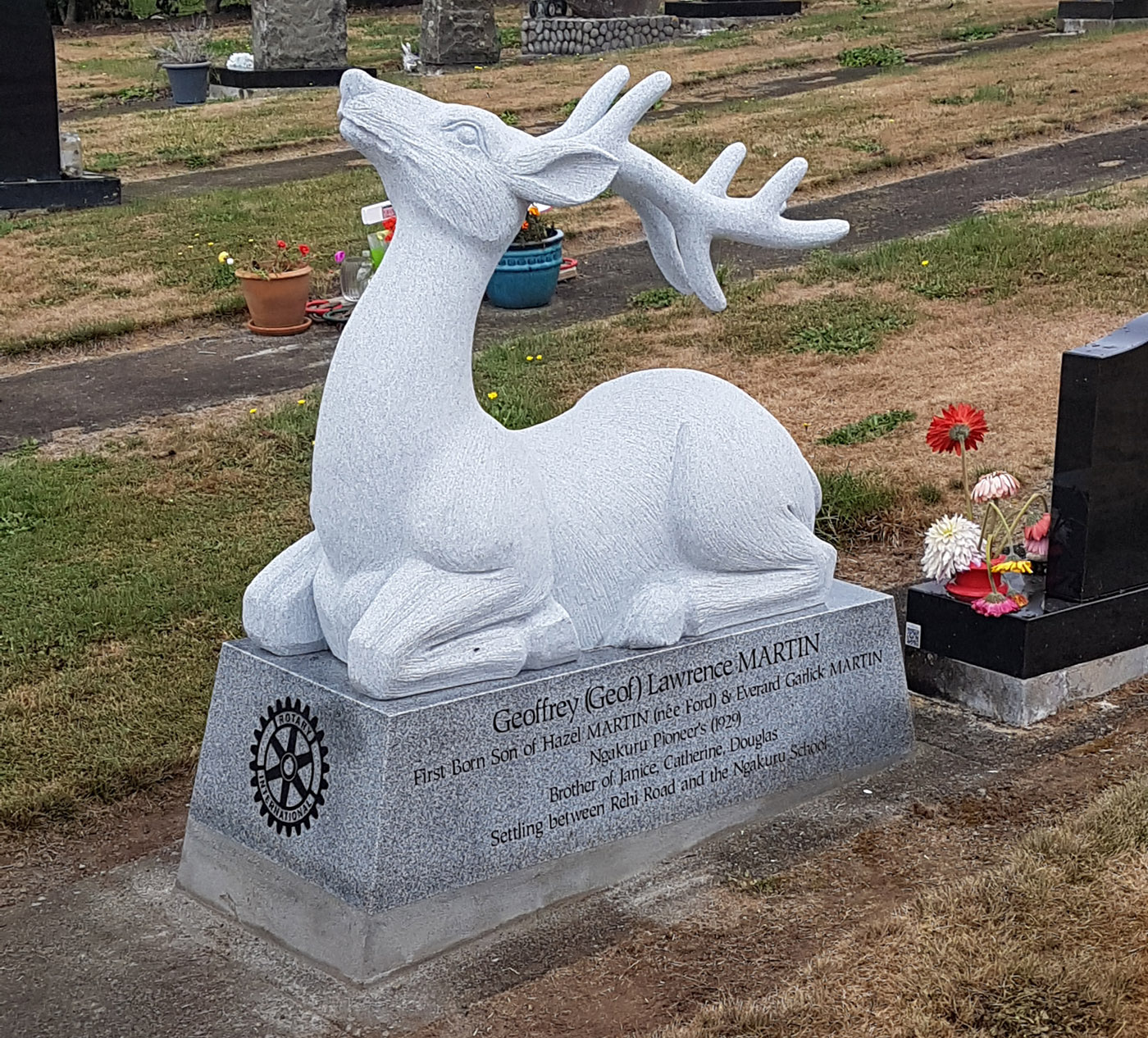
Over the years, we've completed a variety of custom pieces and larger-scale memorials, including the Tangiwai Memorial
Yes, we’re happy to help you arrange your own memorial. For many, planning ahead provides peace of mind.
There are a few ways to do this. Some choose to purchase the headstone in advance, with everything except the final dates inscribed. The memorial can be stored at home or with us until needed. When the time comes, we complete the inscription and arrange installation.
Others prefer to meet with us, finalise a design, and leave the details with their will or lawyer for future use.
Yes, we certainly do. You can view examples in our restoration gallery.
We repair and reletter older headstones and plaques, including painting and regilding in cemeteries across the region. For families living elsewhere, we also offer a memorial cleaning service.
Lettering is cut directly into the granite and will remain permanently. However, the paint used to colour the lettering does wear over time, so we recommend repainting (re-lettering) to maintain clarity.
As a guide, on black granite, white or silver paint usually lasts 10–15 years, while gold can last 20–30 years. Colours like red fade faster due to UV exposure.
Upright headstones tend to preserve painted lettering better than flat plaques, which face more direct weathering.
Other granite colours may not hold paint as well as black. If you’re thinking about an alternative colour, we can advise on how long the lettering is likely to last based on our experience.
Granite is one of the hardest natural materials and has been used for centuries in long-lasting structures. Most granite used in memorials is around 350 million years old and is sourced from quarries worldwide.
While granite itself will last for generations, in New Zealand’s climate, moss, mould and lichen can damage the polished surface if it’s not cleaned regularly. We recommend cleaning once or twice a year—this can be done by you, or we can take care of it if you're based out of town.
Granite has stood the test of time. The Egyptians used it for their pyramids, and many Hindu temples were built from granite. In Europe, granite memorials from the 1800s still stand today—often needing just a clean to restore their original appearance.
Yes, we can help turn your idea into a finished memorial. Many families come to us with a clear vision, and we work alongside them to make it a reality.
Take a look at our custom gallery to see examples of what’s possible.
Custom memorials can be more costly, depending on size and complexity. They also take longer to produce than standard pieces, so we recommend allowing at least 4 to 6 months for design and manufacture.
No, not all memorials are allowed in every cemetery. Each cemetery has its own bylaws that set out what materials, sizes, and styles can be used in different sections.
Private cemeteries and some urupā are exceptions, with fewer restrictions.
We’re familiar with local rules and can check requirements for cemeteries across New Zealand to ensure your memorial meets the necessary guidelines.
Yes, in some situations you can install the memorial yourself. Our quotes normally include installation, but if you’re considering doing it yourself, let us know—we’ll check if it’s allowed and update the quote if needed.
Public cemeteries usually require installation by a registered professional and operate under a permit system. For private cemeteries and urupā, families sometimes choose to handle installation themselves.
If another monumental mason is installing the memorial, we’ll confirm their costs and share that with you at the start.
We can create a wide range of artwork to personalise your memorial. So far, we’ve never had to say, “we can’t do that.”
There are many ways to achieve the look you want — whether through hand-drawn designs, laser etching, or rayzist engraving. Have a look at our artwork gallery to see some examples.
After a memorial has been installed or restored, cleaning it once or twice a year helps prevent lichen from building up.
Regular cleaning keeps the surface in good condition. But we understand this isn’t always possible if family members live elsewhere or can’t visit the cemetery.
If that’s the case, get in touch—we can handle the cleaning for you and send through photos once it’s done.
Photo ceramics are built to last outdoors. Fired in a kiln at over 900 degrees, they’re made to resist fading and surface wear over time.
Take a look at our photo gallery to see examples of how photos have been included in memorials.
We also offer rayzist and laser imaging, where images are either sandblasted or etched directly into the granite.
These methods are as durable as the stone itself.
Rayzist images, like painted lettering, may need repainting after about 10 years.
We’re able to send memorials anywhere in New Zealand.
As with local projects, we’ll confirm the cemetery’s bylaws or urupā requirements before finalising your design.
Once complete, the memorial is carefully packed and shipped to your chosen address. We can arrange installation with a local monumental mason, or in some cases, the family may choose to install it themselves.
Yes, we still work with marble when requested or where it suits the project. Nathan is one of only two stonemasons in the Waikato with extensive experience in working with marble.
In the past, marble was a popular choice because it's much softer than granite, making it easier to cut, shape, and carve by hand. However, over time, marble wears down and can cause lead lettering to loosen or fall out.
With modern tools now allowing granite to be shaped and finished in many ways, marble is used less often — but it remains an option for those who prefer it.